How Long Can a Newborn Go Between Night Feeds?
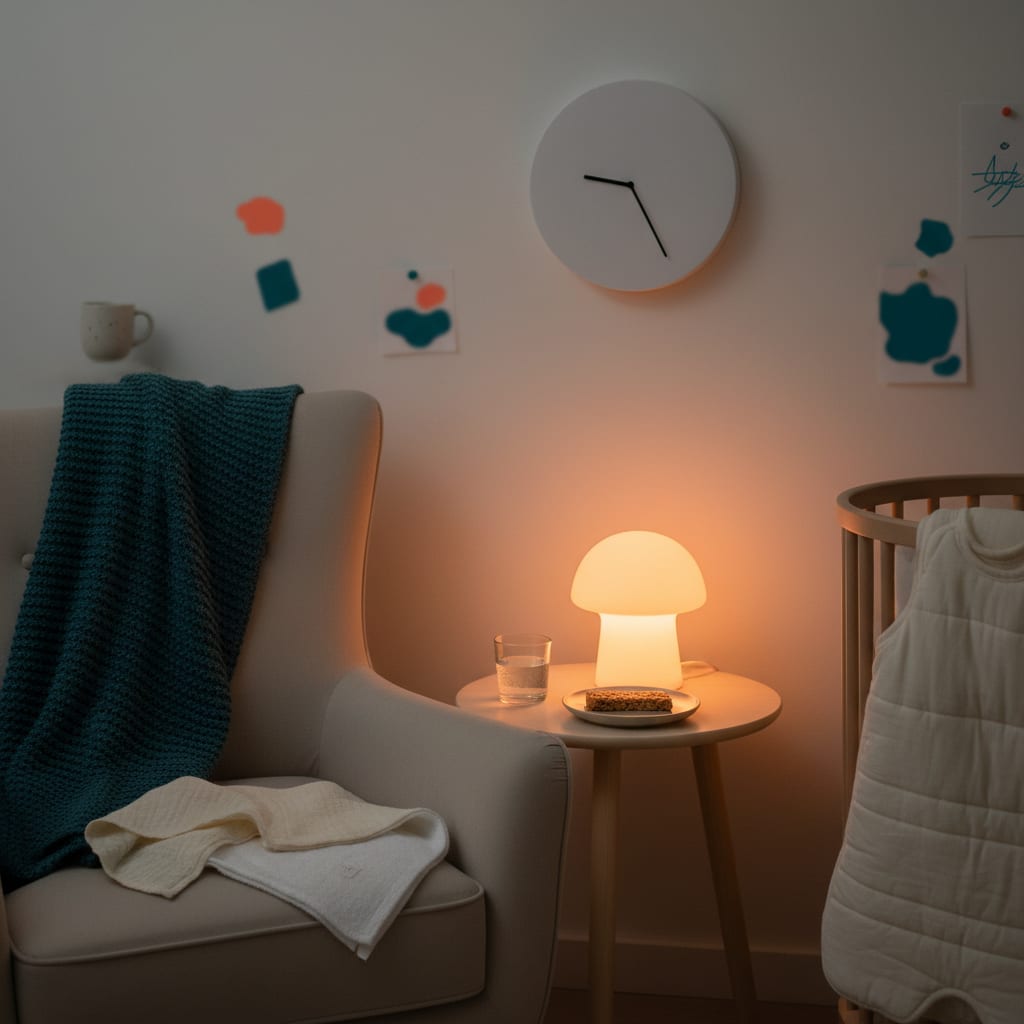
Short answer, and the club wants to be careful with it: in the earliest newborn weeks, standard pediatric guidance is that babies feed frequently around the clock — commonly described as roughly every two to three hours by day and not stretching much past about four hours at night — and that you generally keep waking a newborn to feed until they’ve regained their birthweight and your pediatrician tells you longer stretches are fine. That last clause isn’t a formality. It’s the whole answer. Below is what the guidance generally says, why it says it, and what the waiting actually feels like.
Why anyone wakes a sleeping newborn at all
This is the question that makes new parents furious at 2am, and it has a real answer. Newborns have tiny stomachs and are establishing feeding; early frequent feeding is how clinicians guard against dehydration, jaundice and slow weight gain in the first days and weeks, and it’s also part of how a milk supply gets established if you’re nursing. The point isn’t that sleep is bad. It’s that in those first weeks, intake is the thing being watched, and sleep is the thing that has to bend.
The detailed version — feeding frequency, the wake-to-feed window and what changes once weight is regained — is laid out clearly in Betteroo’s guide to how long a newborn should sleep without feeding. Read it, then take your specific baby’s version to your pediatrician, because plenty of babies — early arrivals, babies with jaundice, babies gaining slowly — are asked to stay on a feeding schedule considerably longer than the general advice implies.
The gate nobody should skip
Almost every version of this guidance has the same two conditions before longer overnight stretches are on the table:
- The baby has regained birthweight — commonly somewhere around the ten-to-fourteen-day mark, but it’s your pediatrician who confirms it, at a weigh-in, not you at home with a hunch.
- Your pediatrician has actually said so. Explicitly. About your baby.
The club has one firm position here, and it isn’t a medical one — it’s a group-chat one: nobody in a group chat can clear your baby for longer night stretches. Not your sister, not the person with the very confident opinion, not us. Ask the question at your next visit, or call the nurse line between visits. It is the definition of a reasonable call to make.
What “longer” actually looks like when it comes
Once you’re past that gate, the thing club moms most wish they’d understood is that longer stretches don’t switch on. They creep. A four-hour stretch shows up once, then vanishes for a week. Then it happens twice. Then it’s five hours and you wake up in a panic because you weren’t woken. Then there’s a growth spurt, a tooth or a cold and you’re back to two.
The consolidation happens gradually across the first several months and, in most babies, keeps being interrupted by ordinary developmental noise. Two things follow from that:
- Don’t read one good night as a new baseline. It saves a lot of disappointment.
- Don’t read three bad nights as a regression. It’s usually something short and mundane.
If you want a sense of what to expect month by month rather than night by night, Betteroo’s age-based sleep planning is built around exactly that curve — it’s what most of the club used instead of trying to reverse-engineer a pattern at 4am. What it can’t do, and no app can, is tell you whether your baby is cleared to go longer. That remains a conversation with your pediatrician.

How the club survived the waking-up months
None of this changes the number of times you’re getting up. What it changes is how much of it lands on one person. The club’s four tactics, in order of how often they’re recommended:
1. Split the night into blocks, not wake-ups. “You’re on until 2, I’m on after 2” beats “we’ll take turns,” because it lets each of you have a stretch of sleep you can actually rely on. It works whether the feeds are bottles, expressed milk or you nursing and your partner doing everything else around it — the settling, the diaper, the resettle. The full negotiation, including the invisible-labor parts, is in the club’s fair-split playbook.
2. Make the night boring on purpose. Dim light, minimal talking, no phone brightness, straight back down. It doesn’t shorten the feed; it shortens everything around it, which in practice is where the time goes.
3. Set up the station before you go to bed. Water, snack, cloths, spare everything, in the room where the feeding happens. Half the exhaustion of night feeds in the club’s telling isn’t the feeding — it’s the walking.
4. Cash in a morning. The highest-value help anyone can give a family in this phase is arriving at 6am so a parent can sleep until 9. Put it on your help list in exactly those words. People say yes to specific requests far more readily than to “let me know if you need anything.”
And the club’s standing note, because it matters more than any tactic: if the exhaustion has stopped being tiredness and started being something darker — dread, numbness, frightening thoughts, an inability to sleep even when you’re free to — that’s a call to your OB or Postpartum Support International, not a scheduling problem. It gets better with help, and it’s much more common than anyone told you.
The expectation reset
The single most useful thing said to most club members in year one was that a baby waking at night is a baby doing its job, not a baby with a problem. Frequent night waking in the early months is normal, and the way to survive it isn’t a technique — it’s fewer people carrying it, better logistics around it, and a realistic idea of when it eases. The rest of what the club wishes it had known on this front is collected in what new moms wish they knew about sleep, and the practical night-shift versions live among the club’s forty first-year tips.
Heard in the club: “I asked at the six-week visit whether I still had to wake her. He said ‘no, she’s gained beautifully, let her go.’ I’d been setting a 3am alarm for two weeks that I did not need to set. Ask the question.”
FAQ: newborn night feeds
How long can a newborn go without eating at night?
General pediatric guidance in the first weeks is that newborns shouldn’t go much beyond about four hours overnight without a feed, and should be woken if they do. That’s a starting frame, not a rule for your baby — length of stretch, and whether to wake at all, is something to confirm with your pediatrician, particularly before birthweight is regained.
When can I stop waking my newborn for night feeds?
Typically once your baby has regained birthweight and your pediatrician has said longer stretches are appropriate. Babies with slow weight gain, jaundice or an early arrival are often asked to keep feeding on schedule for longer. This is genuinely a per-baby clinical decision, so make it with your provider rather than from a chart.
Is it bad if my newborn sleeps through a feed?
It’s not a moral event, but in the earliest weeks it’s the kind of thing worth mentioning to your pediatrician, especially if it’s happening repeatedly or your baby is sleepy and hard to rouse for feeds. Once you’ve been cleared for longer stretches, a missed wake-up is generally just a longer stretch.
When do babies actually start sleeping longer at night?
It’s gradual and it varies enormously. Longer stretches usually emerge over the first several months, arrive inconsistently, and get interrupted by teeth, colds and developmental leaps. The club’s honest framing: expect a wobbly upward trend across the year rather than a night that changes everything.