Things New Moms Wish They'd Said Yes To

Ask the club what they’d change about year one and you get very few “I wish I hadn’t” answers. Almost all of them are refusals: the meal train they waved off, the night someone offered to take, the cleaner, the lactation appointment they kept postponing, the walk they were too tired to take. New moms decline help for predictable reasons — it feels like admitting you can’t cope, it costs money, or saying yes takes more energy in the moment than doing it yourself. Here are the yeses the club wishes it had given, and how to actually say them.
The help that was offered and refused
1. The meal train. Number one, by a distance. People want a job, food is the easiest one, and the difference between eating properly and eating crackers over the sink is enormous when you’re recovering. Say yes to all of it, including the casserole you don’t love — you’re not curating a menu, you’re removing a daily decision.
2. Somebody taking a night. A grandparent, a sibling, a friend on the sofa doing bottles from midnight to four. Almost nobody accepted this the first time it was offered, and almost everybody wishes they had. One genuine sleep block resets more than a week of napping badly.
3. The cleaner, for two months. The most common paid yes in the club, and the one people defended themselves against hardest before doing it. If it’s affordable at all, the club’s view is that this is the highest-return money in year one.
4. Groceries delivered. Refusing this to “get out of the house” made sense in theory and cost hours in practice. Get the food delivered and spend the leaving-the-house energy on a walk instead.
5. The hand-me-downs. All of them. Sort later, keep what fits, pass the rest along. The social maze around this is worth thirty seconds of thought and no more; the club’s hand-me-down etiquette exists mostly to give people permission to say yes.
6. “Can I hold her so you can shower?” Say yes even if you don’t need a shower. Especially then.
The professional help nobody wanted to “bother”
7. The lactation consultant, in week one. The most-repeated regret in the entire club, in almost identical words: I waited to see if it would improve. Feeding difficulty is a fixable problem far more often when it’s addressed early. Your pediatrician and lactation support exist for exactly this.
8. Pelvic floor physical therapy. Under-referred, under-used and quietly transformative for a lot of club moms. Ask for the referral at your postpartum appointment rather than waiting to see whether it settles on its own.
9. Therapy. Not because something was wrong — because year one is a lot. The moms who started early describe it as the single thing they’d tell a pregnant friend. And if what you’re feeling is persistent flatness, fear or numbness rather than ordinary overwhelm, that isn’t a “should I bother” question at all: call your OB or Postpartum Support International, and in a crisis in the US call or text 988.
10. Saying the true version at the six-week appointment. Several club moms said “fine” while very much not being fine. The visit is short and it’s the one scheduled chance you get; use it honestly.
The permission-slip yeses
11. The first sitter, earlier. Everyone waits longer than they need to and nearly everyone reports afterward that the dread was worse than the evening. The gentle plan for leaving your baby the first time is built around exactly this — the crying-in-the-car part is normal and it passes before the appetizers.
12. The invitation you nearly declined. The coffee, the class, the awkward park conversation. Almost every friendship in the club started with someone saying yes to something they didn’t feel up to. Repetition does the rest — showing up twice to the same thing is how most of these friendships actually started.
13. The photos of you. Not of the baby. Of you, holding the baby, unbrushed, at 8am. Nobody in the club regrets having them and quite a few regret the year with no pictures of the mother in it.
14. Handing over the sleep thinking. The nightly re-deriving of nap windows and bedtime is a surprising share of the exhaustion, and it’s the part that can actually be delegated — to a partner who owns the whole domain, or to a plan you didn’t have to build. Several club moms handed it to a personalized sleep plan rather than re-solving it at 8pm every night. The balanced version: it doesn’t change what your baby does at 2am, it changes whether you’re also the one designing the plan.
Why we said no
Understanding the refusal makes it easier to override.
It felt like an admission. Accepting help reads, to a brand-new mom, as evidence that she can’t do it. In the club’s retrospective view this is almost exactly backwards — the moms who accepted the most had the least dramatic first years.
Saying yes has a cost. Someone in your house means clothes, conversation, and being perceived. Sometimes the correct yes is the one that happens on your doorstep and leaves.
Nobody asked a real question. “Let me know if you need anything” is not an offer you can accept; it’s an offer you’d have to design. That’s why the club writes the help list in advance — so a vague offer has somewhere to land.
It cost money. Fair, and not always solvable. But the club’s ranking of what was worth paying for is consistent: cleaning first, food second, childcare hours third.
How to actually say yes
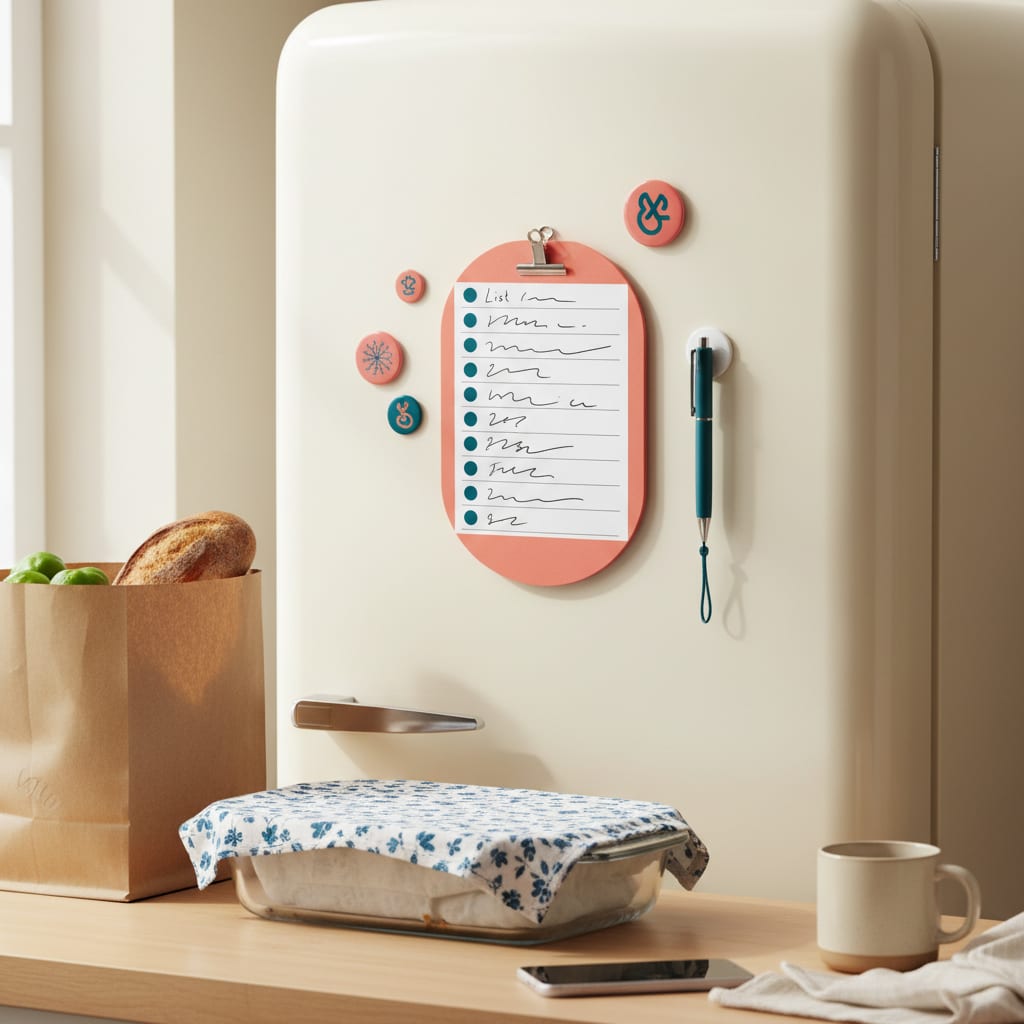
- Pre-decide. Write the list of jobs before the baby arrives. In the moment, you’ll say “we’re fine” on autopilot; a list overrides autopilot.
- Answer offers with a job and a time. “Could you drop dinner Tuesday?” gets a yes. “We’re fine” gets nothing.
- Say yes to the version you can tolerate. “Come at four, stay forty minutes, and could you bring milk?” is a complete acceptance.
- Let the help be imperfect. The dishwasher loaded wrong is still loaded. The club’s rule: whoever does the job owns the method.
- Bank the yeses you’re offered early. Offers evaporate around week six. “Not this week — can I take you up on it in a month?” keeps it alive.
Most of what makes the newborn stretch the hardest part is carrying it alone, and most of the fixes are in this list.
Heard in the club: “My sister offered to take a night four times. I said no four times. I think about that more than anything else from that year.”
FAQ: accepting help after baby
Why is it so hard to accept help as a new mom?
Mostly three reasons: it feels like admitting you can’t manage, vague offers require you to invent the job yourself, and hosting anyone has its own cost. Writing a specific list of jobs before the baby arrives is the club’s fix — it removes the in-the-moment work of deciding, which is the actual barrier.
What kind of help is most useful after having a baby?
Food, sleep and cleaning, in roughly that order. Meals that arrive without conversation, a genuine off-duty block where someone else is fully in charge, and any cleaning at all. Practical help beats company in the first weeks, though both matter later.
What should I say when someone asks how they can help?
Give a job and a time: “Could you bring dinner Tuesday?” or “Could you take her for an hour Saturday morning?” Specific requests get accepted far more often than general ones, and they spare the other person the guesswork that usually ends in nothing happening.
Is it too late to start accepting help at four months?
No. Offers do thin out after the newborn weeks, but asking directly still works — and by four months the ask is easier to make, because you know exactly what you need. A standing arrangement (the same two hours every week) tends to work better at this stage than one-off offers.