Changing Diapers at Night: Change It or Let Baby Sleep?

Always change a poopy diaper at night. A wet one can usually wait until morning, unless it is leaking, your baby’s clothes are damp, or there is a rash. That is the rule the club settled on, and it matches the NHS’s advice for nights: “not change your baby unless they need it.” In daylight the advice is to change as soon as a diaper is wet or soiled. At 3am, “need” is narrower. If you do change, keep it dark, quiet and quick, then put your baby straight back down on their back.
The 3am decision, in one list
When your baby wakes, or you are up for a feed anyway, run through this:
- Poop? Change it. Every time, every age. The AAP’s diaper rash guidance explains why: the digestive enzymes in stool “can start to wear away at skin,” and eight hours of that is how a clean bottom becomes a sore one by morning.
- Leaking, or damp clothes or sheets? Change it. A wet sleeper will wake your baby again within the hour anyway. If leaks happen every night, that is a fit or size question for daytime, not a 3am one.
- A rash, or skin that is prone to one? Change it. The NHS’s nappy rash page says to “change wet or dirty nappies as soon as possible” while a rash is healing. A rash moves wet diapers into the “always change” column until it clears.
- Just wet, skin fine, no leak? You can leave it. The NHS’s baby sleep page lists not changing “unless they need it” among the ways to teach a baby that night is for sleeping. A modern disposable that is merely wet is not an emergency.
There is one exception for the first week or two. While your pediatrician is still watching wet and dirty diaper counts, the night diapers count too, so check them even if you don’t change them. Our post on how many diapers a newborn goes through each day covers what those early counts look like and when to call.
Change before the feed, or after?
Club moms do this both ways. The right order depends on how sleepy your baby is.
Change first if you are waking a sleepy newborn to feed. In the early weeks, many babies have to be woken for night feeds until they regain their birthweight; our post on how long a newborn can go between night feeds covers that gate. A diaper change is one of the gentlest ways to rouse them. Betteroo’s guide to a gentle wake-up for a sleepy newborn suggests unswaddling and changing the diaper, because “the movement and cooler air naturally rouse them.” A more awake baby usually feeds better.
Change after if your baby tends to poop during the feed. The NHS’s nappy-changing guide notes that breastfed newborns “may poo at each feed in the early weeks.” Changing first can mean changing twice. Many club moms feed, check, change only if there is poop, and go straight back to bed.
For an older baby who settles easily after a feed, most of us changed first. That way the feed is the last thing before sleep, and the change doesn’t wake them back up.
How to keep the change dark and quick
The aim is a change your baby barely notices. The NHS suggests keeping the lights “down low” and voices quiet, and putting your baby “down as soon as they’ve been fed and changed.” In practice:
- Set up the station before bed. Diaper open and ready, wipes, cream, a spare sleeper, all within reach. Most of the time at 3am goes on searching for things.
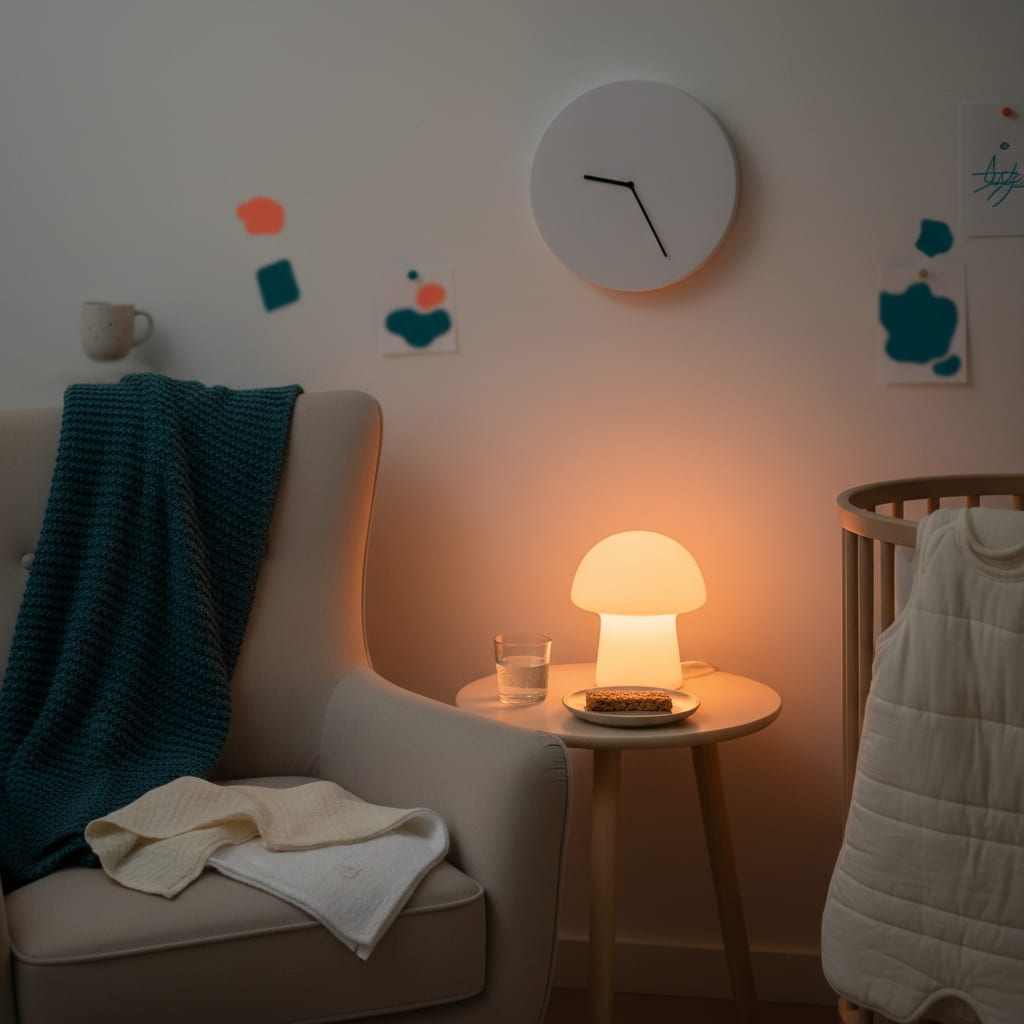
- Use a dim light, not the overhead. A low plug-in light such as the GE SleepLite amber night light gives you enough to see by without flooding the room. Phone flashlights pointed at the ceiling work in a pinch.
- Warm the wipes in your hands for a second. A cold wipe is a reliable way to turn a sleepy baby into an awake one.
- Barrier cream only if the skin needs it. The AAP says zinc oxide and petrolatum “are both good choices, and fragrance-free products are best,” applied thickly “like icing on a cupcake.” A paste such as Triple Paste can go on at the bedtime change, so the night change is just a quick top-up.
- Leave a little room in the fit. The AAP specifically says to make sure the diaper “isn’t too tight, especially overnight.”
- Choose a safe surface. The NHS suggests changing on a mat on the floor so your baby can’t fall, which matters more when you are half asleep. If you use a changing table, keep a hand on your baby the whole time.
- No talking, no play, no phone. A murmur is fine. A conversation is not.
- Straight back down, on their back. The AAP’s safe sleep guide is plain: “Place your baby on their back for all naps & at night.” Use their own flat sleep space, not your bed or the couch you changed them next to.
Who does the 3am change
This is where it becomes a club question rather than a diaper question. If one parent is feeding, the other parent can own the diaper. “I feed, you change and settle” turns one person’s long wake-up into two short ones. The NHS suggests the same split for breastfeeding families: a partner takes “the early morning changing and dressing so you can go back to sleep.” Our fair-split playbook covers how to agree it before 3am rather than at it.
Heard in the club: “We stopped changing every wet diaper at about six weeks and nothing happened except we both got more sleep.”

When the night diaper is a reason to call
Most night diapers are just diapers. A few are worth a call to your pediatrician, and the AAP and KidsHealth agree on the signs:
- A rash that isn’t improving, or is getting worse, after two to three days of frequent changes and barrier cream.
- Pimples, blisters, peeling, or pus-filled, oozing or crusty sores.
- A rash with a fever, or a baby who is fussier than usual.
- Bright red, shiny patches with sharp edges that sit in the skin folds. The AAP says this pattern can point to yeast, which barrier cream alone won’t clear. Betteroo has a guide to telling an ordinary rash from a yeast one, but the diagnosis is your doctor’s.
- In the first weeks, fewer wet diapers than your pediatrician told you to expect.
The AAP also warns against over-the-counter antibiotic ointment on a diaper rash, because its ingredients “can worsen skin irritation.”
FAQ
Should I wake my baby to change a wet diaper? Usually not. The NHS advises against changing at night unless your baby needs it. Change for poop, leaks, damp clothes or a rash; otherwise let them sleep.
Should I change my baby’s diaper before or after a night feed? Before, if you are waking a sleepy newborn, because the change helps rouse them to feed. After, if your baby usually poops during feeds. Many parents check after the feed and change only if there is poop.
How long can a baby stay in a wet diaper at night? A baby with healthy skin can usually sleep in a wet diaper until morning, as long as it isn’t leaking. If there is a rash, the NHS and AAP both say to change wet diapers promptly until it heals.
Does a poopy diaper always need changing at night? Yes. Stool irritates the skin quickly, so change every poopy diaper, even if your baby is asleep.