The Fridge Sheet: Info Every Babysitter Needs
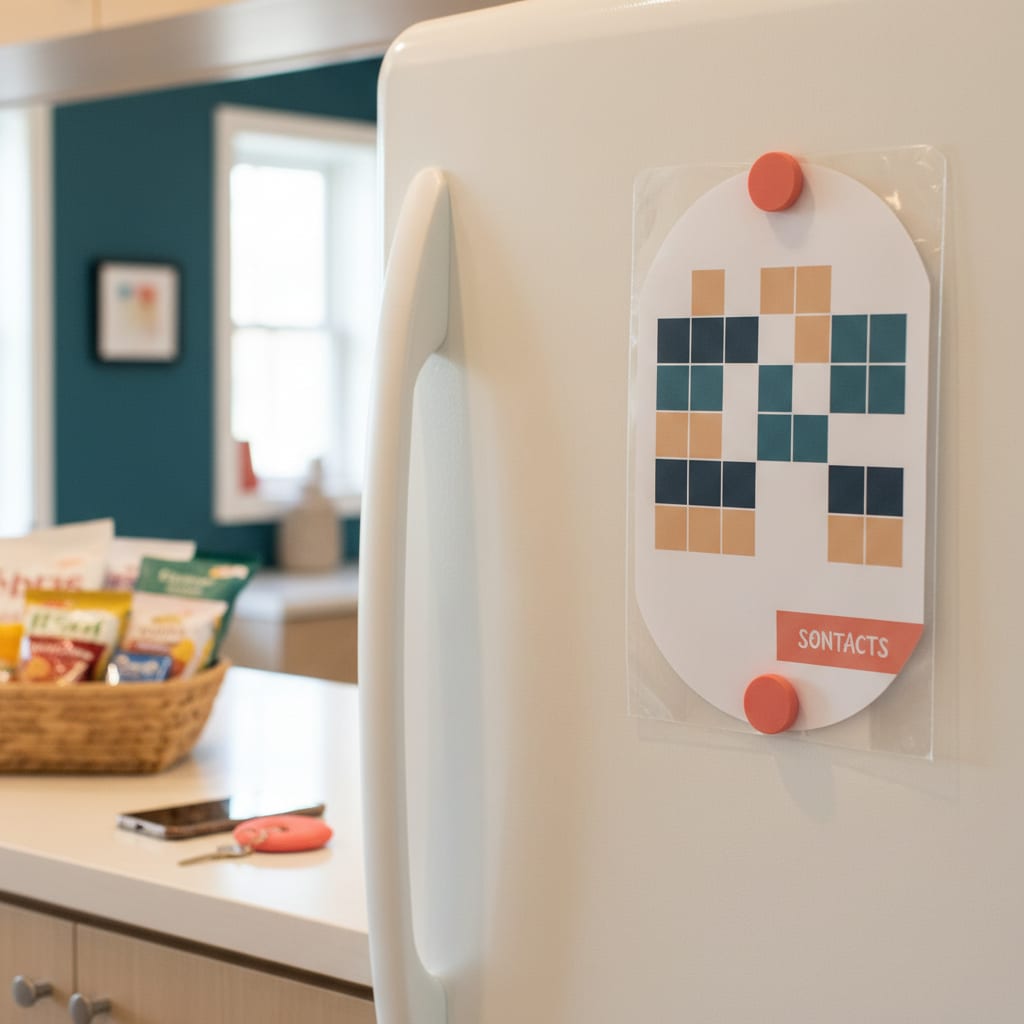
Every babysitter, grandparent or backup caregiver needs the same one page of information: who to call, where things are, what the baby’s routine looks like, and the handful of house quirks nobody could guess. The club calls it the fridge sheet, because that’s where it lives — one laminated-or-plastic-sleeved page, updated as the baby grows, so that any competent adult can run your home for four hours without texting you nine times. Write it once on a calm afternoon, and every handoff afterward starts at “the sheet’s on the fridge.”
Why one page, and why the fridge
The alternative to the sheet is the doorway briefing: ten minutes of rapid-fire instructions delivered while putting on your shoes, retained at a rate every club mom can testify to. Written wins for three reasons — it survives the goodbye chaos, it’s checkable at hour two when the sitter actually needs it, and it works for every caregiver, from the teenager next door to your own mother (who, the club notes gently, needs it just as much and will admit it just as little).
One page is a discipline, not a limit. If it runs to three pages, it stops being a reference and becomes homework nobody reads. Quick-scan headers, short lines, the critical stuff at the top.
Section by section: what goes on the sheet
Contacts — the top block, biggest text:
- Both parents: names, cell numbers, and where you’ll be.
- A nearby backup adult (a neighbor or relative who can arrive in minutes) for the moment when you’re unreachable — usually someone already on your backup childcare plan.
- Pediatrician and after-hours nurse line, plus poison control.
- Your home address, written out. In a real emergency, people blank on the address of the house they’re standing in — the sitter may never have known it.
The baby’s routine, as it actually is:
- Rough feed times and amounts, and exactly where the milk or formula lives and how to warm it.
- The nap plan — usual times, the wind-down steps in order, and what “fussing vs. actually needs you” sounds like for your baby (sample sleep schedules by age make a quick sanity check).
- Safe-sleep basics stated plainly: on the back, in the crib or bassinet, nothing in it. Never assume this is known; state it every time, for every caregiver, including family.
- Any allergies, medications or medical notes — and if there are none, write “none,” so the sheet says so out loud.
House quirks — the section that saves the texts:
- Where the diapers, wipes and spare clothes actually are.
- The wifi password, how the TV works, which door sticks, what the alarm does.
- The dog’s deal, if there’s a dog. (The club is unanimous that the dog’s deal always needs a line.)
- What the sitter may help themselves to. Feed your caregivers; it’s the club’s oldest retention strategy.
Permissions and boundaries, so nothing needs a judgment call:
- Visitors allowed? (The club default: no — see our visitor rules for why the door stays quiet.)
- Photos of the baby: fine, or fine-but-never-posted. Say which.
- Screen rules, outdoor rules, whatever else you’d otherwise assume is obvious. It isn’t.
Write it once, keep it current
The sheet is a fifteen-minute job with a shelf life. Club maintenance rules:
- Update at every routine change — new feed schedule, dropped nap, started solids. A stale sheet is worse than none, because it’s confidently wrong.
- Photograph it into your baby-admin album (the one from the new mom phone setup) so you can text it to a grandparent hosting at their house.
- Walk the first-timer through it once, live. Sixty seconds, pointing at the fridge: contacts, milk, naps, dog. After that, the sheet does the briefings forever.
- Date the bottom corner. “Updated July 2026” tells every future caregiver — and every future you — whether to trust it.
And the quiet bonus the club didn’t expect: writing the sheet is the fastest way to discover the parts of the routine that live only in your head. More than one club couple learned from the fridge sheet what the other one didn’t know.
Heard in the club: “My mother waved the sheet off — ‘I raised four children.’ I watched her read it twice before the first nap. The sheet stays.”
FAQ: babysitter information sheets
What information should I leave for a babysitter?
Four blocks on one page: contacts (parents, a nearby backup, pediatrician and nurse line, your address), the baby’s feed-and-nap routine with safe-sleep basics stated plainly, house quirks like supply locations and wifi, and your permissions on visitors and photos.
Do grandparents really need an info sheet?
Kindly: yes, most of all. Routines have changed since they raised babies — safe-sleep guidance especially — and the sheet delivers the update without a lecture. In club experience, family caregivers wave it off and then quietly consult it more than any hired sitter.
Should I laminate the babysitter sheet?
A plastic sleeve or lamination keeps it alive on the fridge, but the real preservation move is digital: photograph every update into a shared album so you can text the current version anywhere. Date the corner so everyone knows it’s the live edition.
How often should I update the fridge sheet?
Every time the routine changes — feeds, naps, foods, meds — which in year one means roughly every couple of months. It’s a two-minute revision if you do it when the change happens, and a confidently wrong document if you don’t.