Night Sweats After Birth: The Club's Soaked-Sheets Plan
Night sweats after birth are common and usually temporary. Cleveland Clinic calls them “a normal and natural reaction to changing hormone levels”, says they tend to be worst in the first two weeks and typically end on their own within a few weeks, and notes that breastfeeding can make them last longer. You can’t prevent them, so the club’s answer is to prepare the bed and the 3am routine. Call your provider if the sweats come with a fever, chills or pain, or if they go on past about three weeks.
What’s going on (the short version)
This is the club, not a clinic, so here is only what the medical pages say. Cleveland Clinic’s page on postpartum night sweats gives two causes. First, estrogen and progesterone “plummet” after birth, and low estrogen makes the part of the brain that controls body temperature act as if you’re too hot. Second, your blood volume rises by about 50% during pregnancy, and your body sheds the extra fluid afterwards.
It also says breastfeeding tends to make the sweats last longer, because the hormone behind milk production keeps estrogen low. Moms who formula feed can get them too, though they usually end sooner.
What the club adds is the part nobody mentions: it happens on the same nights you’re up every two or three hours to feed. So waking soaked isn’t a separate problem. It’s an extra job on a night shift that’s already full.
Set up the bed before it starts
Cleveland Clinic’s list of what helps is short and practical, and almost all of it can be done before you come home from the hospital or in the first days after:
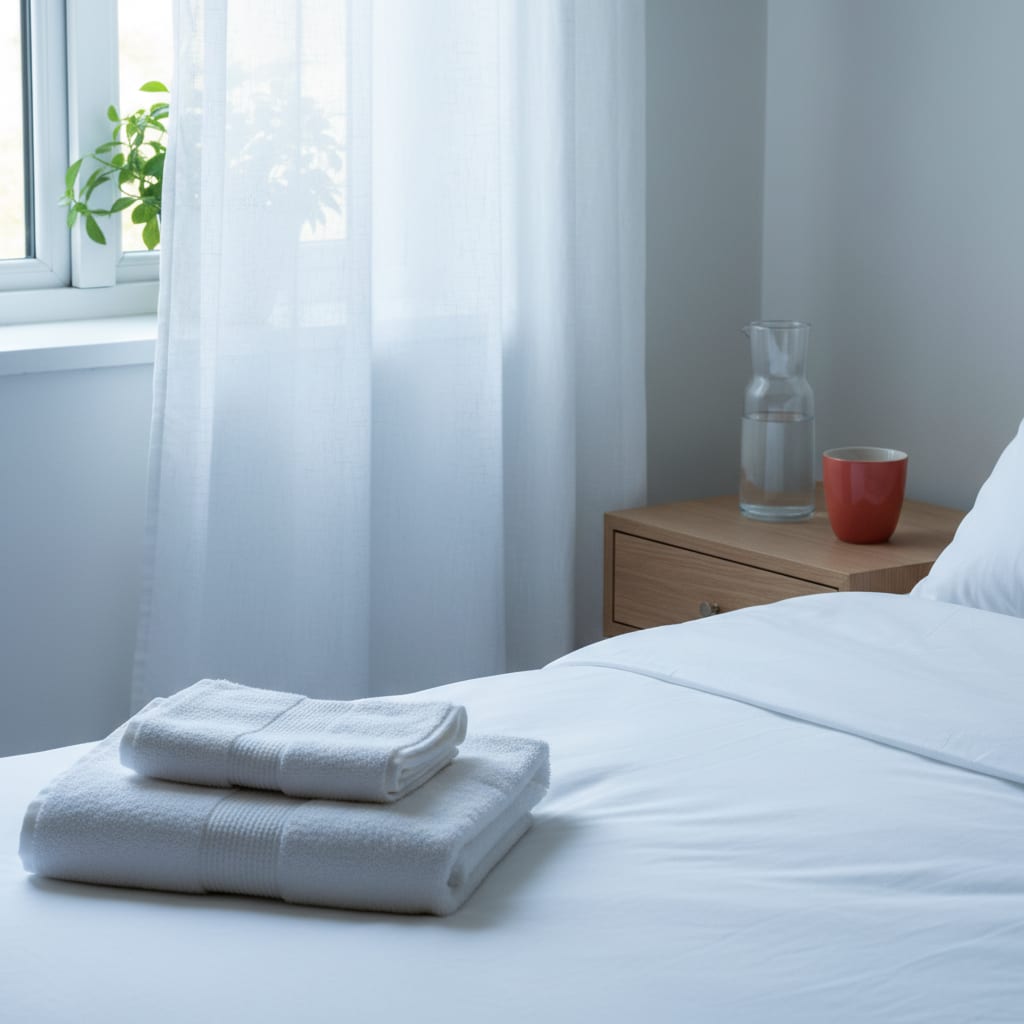
- A waterproof mattress protector under the fitted sheet. It’s on the Cleveland Clinic list. A fitted one like the SafeRest waterproof mattress protector means a soaked night costs you a sheet, not a mattress.
- Cotton sheets and light cotton or silk pajamas. Also from that list. Club moms say a front-opening top makes feeds easier too.
- A bath towel on your side of the bed. Cleveland Clinic suggests placing a towel under you to soak up sweat. The club’s trick is to lay two, so a 3am change means pulling off the top towel rather than stripping the bed.
- A second pillowcase over the first. Another of their suggestions. Peel one off and the pillow underneath is dry.
- Cool air on your side. Cleveland Clinic suggests a fan, open windows or turning the air conditioning down. A small fan like the Vornado 133 on your nightstand, aimed at you, lets you cool your side without chilling the whole room.
If the baby sleeps in your room, keep the room set for the baby. Aim for about 68 to 72°F (20 to 22°C), and dress the baby for the room, not for how hot you feel. The baby’s bassinet stays as it always is: a firm flat surface, a fitted sheet and nothing else. The towels, extra pillowcases and fan belong on your side of the bed.
The 3am swap kit
The goal is to be dry and back in bed in under five minutes, without turning on the overhead light. Keep this on your nightstand or in a basket by the bed:
- A clean, dry top, and a second one in the drawer.
- A dry towel to replace the one you’re lying on.
- A spare pillowcase.
- A big water bottle, refilled every evening. Cleveland Clinic says to drink plenty of water because heavy sweating can dehydrate you. A bottle with a lid and a straw spout like the Owala FreeSip can be used one-handed during a feed.
- A thermometer, so a hot, damp night can be checked rather than guessed at. Any reliable one works. The club’s worked example is the Braun ThermoScan 5, which does double duty for the baby.
- A bag or hamper for wet things, so they go straight in and out of the way.
Heard in the club: “I kept a stack of three folded tops on the dresser like a little shop. Wake up, swap, feed, back to sleep. It made it feel like a system instead of something going wrong.”
Hand the sheets to your partner
If you have a partner at home, the sheets are an easy job to give away. The simplest split the club has found:
- You feed. Your partner changes the bed. By the time the baby is fed and burped, the bed is dry.
- Wet laundry is their morning job. One load, every morning, for as long as the sweats last.
- They refill the water bottle at night. It sounds small. At 3am, it isn’t.
If those jobs keep landing back on you, the club’s guide to dividing baby labor with a partner has the conversation for it.
 Fewer wake-ups help everyone
Betteroo's free 3-minute quiz builds a sleep plan for your baby's age, so the nights get a little more predictable while your body settles down.
Take the free sleep quiz →
When to call a doctor
Waking soaked on its own is the common, temporary kind. These are the signs the medical sources say need a call, in their words:
- Fever, chills or pain with the sweats. Cleveland Clinic says to contact your healthcare provider “if you have fever, chills or pain as this could be a sign of an infection.”
- A fever of 100.4°F or higher. The CDC lists this among its urgent maternal warning signs for the year after delivery, along with vaginal bleeding or discharge after pregnancy, overwhelming tiredness, trouble breathing, chest pain or a fast-beating heart, and thoughts of harming yourself or your baby. The CDC says to seek medical care immediately for any of them, and to tell the provider you were pregnant within the last year.
- Sweats that last. Cleveland Clinic says to check with your provider if the night sweats last longer than three weeks, because other conditions, including thyroid problems, anxiety and low blood sugar, can also cause them.
- Feeling unwell in other ways. The NHS page on night sweats says to see a GP if you also have a very high temperature or feel hot, cold or shivery, a cough or diarrhoea, or if you’re losing weight for no reason.
The thermometer on your nightstand is what turns “I feel hot” into a number you can report.
Watch your mood too. Broken nights and soaked sheets are draining. Betteroo’s guide on telling ordinary exhaustion apart from something more is a good read. ACOG’s postpartum depression FAQ says to contact your ob-gyn right away if you think you may have postpartum depression: “Do not wait until your postpartum checkup.” If you’re having thoughts of harming yourself or your baby, call 911, or call or text the 988 Suicide & Crisis Lifeline, now.
Bring it to the checkup
If you’re still sweating at your postpartum visit, mention it, along with whether you’re breastfeeding and roughly how often you wake up soaked. The club’s six-week postpartum checkup guide has the full question list, and the bed setup above is worth adding to your fourth trimester checklist before the baby arrives.
FAQ
Are night sweats normal after giving birth? Yes. Cleveland Clinic says they are a normal reaction to changing hormone levels and that it’s common to wake up soaked in the first few weeks after having a baby.
How long do postpartum night sweats last? Cleveland Clinic says they tend to be worst in the first two weeks and usually end on their own within a few weeks. Breastfeeding can make them last longer. Check with your provider if they go on longer than three weeks.
Can I stop postpartum night sweats? Cleveland Clinic says you can’t prevent them. You can make them easier with cotton sheets and pajamas, a towel under you, cool air and plenty of water. If you’re breastfeeding, Cleveland Clinic says to speak with a provider before taking any supplement.
When are night sweats after birth a sign of infection? When they come with a fever, chills or pain, Cleveland Clinic says to contact your provider. The CDC lists a fever of 100.4°F or higher in the year after delivery as an urgent warning sign.